Pregnancy, Labour, and Breastfeeding After SCI
In North America, women represent approximately a third of the SCI population (Ackery et al. 2004). Approximately 3,000 American women of childbearing age are affected by SCI (Cross et al. 1992). The ability for women to have children is not usually affected once their menstrual cycle resumes (Jackson & Wadley 1999). Few studies exist that specifically address women’s health and pregnancy after SCI, but they show that women with SCI can conceive, carry, and deliver a baby despite an increased frequency of complications during pregnancy, labour, and delivery (Baker & Cardenas 1996; Jackson & Wadley 1999; Morton et al. 2013; Iezzoni et al. 2015; Bertschy et al. 2016), often due to a high risk of developing uncontrolled AD (Sipski 1991; Sipski & Arenas 2006). Women with physical disabilities (53%) are generally less likely to breastfeed than women in the general population (77%) (Morton et al. 2013). A higher prevalence of women that breastfeed was found in mothers who gave birth prior to SCI (Jackson & Wadley 1999).
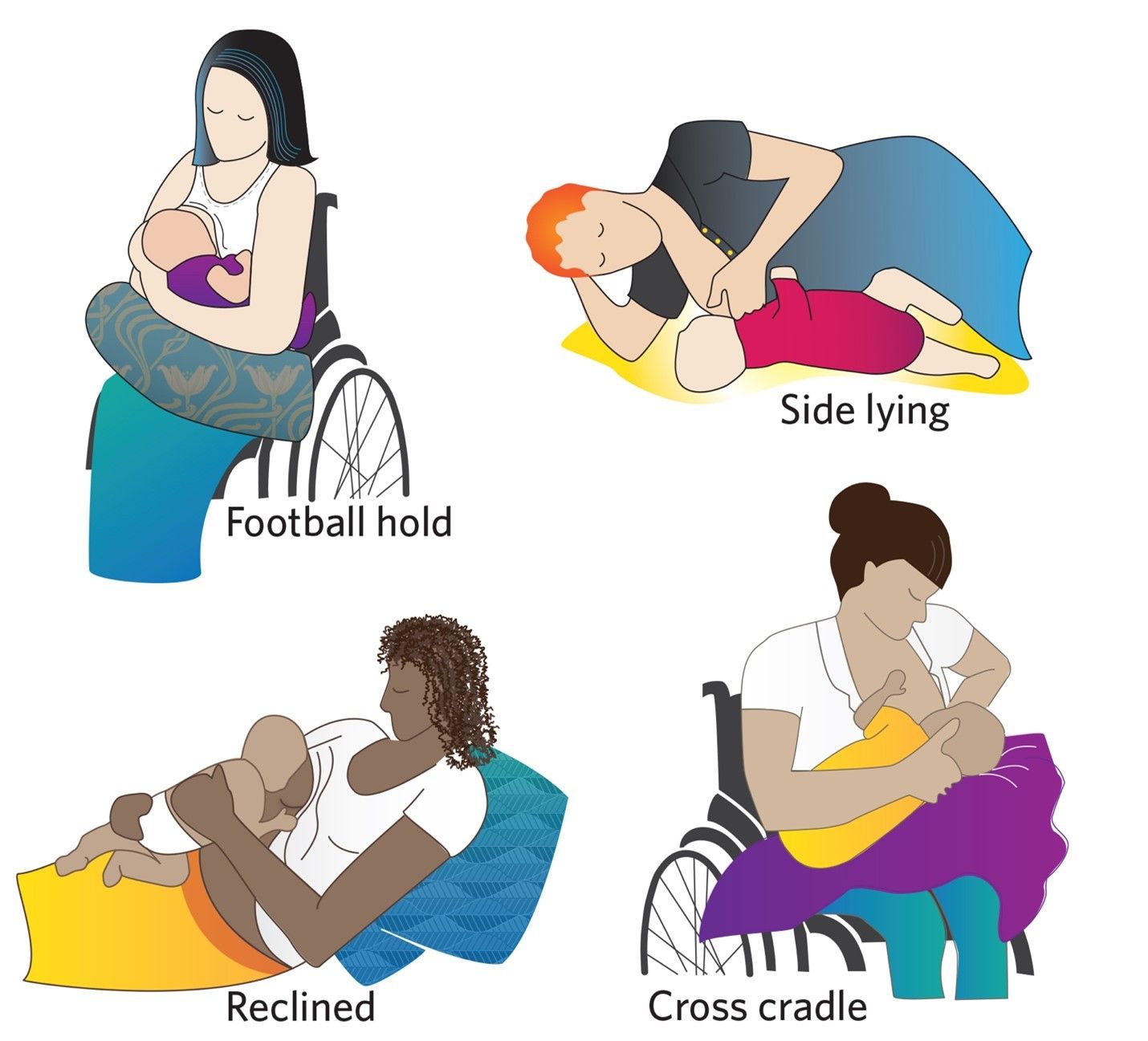
Figure 1. Breastfeeding positions suitable for Moms with SCI
Discussion
Bladder problems, spasticity, pressure sores, AD, and problems with mobility can increase risks for pregnant woman with SCI (Mazzia & Berndl 2023; Skrowronski & Hartman 2008; Robertson et al. 2020) resulting in frequent hospital admissions (Skrowronski & Hartman 2008). Complications may include falls; UTIs, bladder problems; wheelchair fit and stability problems that reduced mobility and compromised safety; significant shortness of breath, sometimes requiring respiratory support; increased spasticity; bowel management difficulties; and skin integrity problems (Iezzoni et al. 2015a). Although there are increased medical complications, pregnancy and delivery for women with SCI are possible without posing significant risks to the mother (Bertschy et al. 2016).
Pregnant women with SCI experience bladder-related changes in the first trimester (Andretta et al. 2019). Within the first two trimesters, most women changed to intermittent or indwelling catheterization. It is possible that this change is warranted by bladder dysfunction during pregnancy. Incidence of UTIs and recurrent UTIs increased during pregnancy particularly women with paraplegia (Andretta et al. 2019; Khalili et al. 2022; Robertson et al. 2020). The relative risk factor for UTIs during pregnancy was 14.90 (Crane et al. 2019). Robertson et al. (2020) found that 36% of women had worsening spasms during pregnancy.
Most pregnancies were carried to term. Andretta et al. (2019) found that 52% of first pregnancies were carried to term and 50% of second pregnancies.
Obstetric outcomes include higher rates of Cesarean-sections and increased incidence of low birth-weight babies in SCI populations compared to the general population (Jackson & Wadley 1999; Khalili et al. 2022; Morton et al. 2013). However, 77% of women with SCI have vaginal births as opposed to 23% have a cesarean (Mazzia & Berndl, 2023; Robertson et al. 2020). A common pregnancy complication of unaware contractions leads to labour going undetected (Mazzia & Berndl 2023). Thus, regular monitoring of uterine tone and cervical dilation and effacement is important (Skrowronski & Hartman 2008).
The life-threatening, emergent nature of AD during labour in women with SCI can be prevented with proper management (McGregor & Meeuwsen 1985). A systematic review (Vieira et al. 2023) found that AD was present in 19 of 37 pregnancies. There are only five studies (n=54) (Ravindran et al. 1981; Hughes et al. 1991; Cross et al. 1991; 1992;Skrowronski & Hartman 2008) with observational evidence recording the management specific to AD during labour. The American College of Obstetrics and Gynecology emphasized that it is important that obstetricians caring for these patients be aware of the specific problems related to SCI (American College of Obstetrics and Gynecology 2002). AD is managed using sublingual nifedipine or intramuscular clonidine during labour, but pre-emptive epidural anesthesia before or during labour is preferred: the latter can also be used in the postpartum period (Skrowronski & Hartman 2008). Adequate anesthesia is recommended in women with SCI during labor and delivery despite the apparent lack of sensation. Vieira et al. (2023) found that most patients had epidural analgesia (68%) followed by no analgesia (24%). Difficulties exist because medications that lower blood pressure can potentially cause acute hypotension, which in turn may affect fetal blood flow. It should be noted that the acute onset of AD in labor can be difficult to distinguish from preeclampsia, but that making the correct diagnosis and initiating appropriate therapy can be lifesaving (Pereira 2003).
Despite the increased risks during pregnancy for women with SCI, the pregnancy experience for women greatly enhanced their lives and marriage (Khazaeipour et al. 2018). In this qualitative study, Khazaeipour et al. (2018) one woman highlighted that “despite the difficulties that I had during the pregnancy, it is such a good feeling to see your child is growing, and it is just unbelievable” showcasing the joys of pregnancy after SCI.
Breastfeeding is associated with short- and long-term reductions in blood pressure and reduced rates of hypertension (Kashiwakura, 2012; Schwarz et al. 2010; Zhang et al. 2015), and women with SCI are therefore encouraged to breastfeed with the intent of preventing development of hypertension (Halbert 1998). However, lowering systolic blood pressure may be harmful for individuals who have lower baseline arterial blood pressure, and a higher risk of orthostatic hypotension (OH) (West et al. 2012). For a mother with persistent low blood pressure, fatigue may set in when holding her baby for an extended period to breastfeed. Additionally, since AD is typically initiated by any painful or non-painful stimulus below the injury level, it plausible that an infant’s suckling, breast engorgement, or mastitis are sufficient triggers in women with upper thoracic and cervical SCI, although it is known to occur with SCI above T10 as well (Vallès 2005). AD was reported during breastfeeding by 38% of women with high level SCI (Holmgren et al. 2018). Two case reports also document AD after breastfeeding in women with tetraplegia (Devenport 1983; Dakhil-Jerew et al. 2008). Removal of stimulus was effective in stopping AD episodes (Dakhil-Jerew et al. 2008). A main reason why women cease breastfeeding is due to the lack of time for breastfeeding or personal care (bladder care, showering, and ADLs) (Lee et al. 2018). There is also a lack of education on breastfeeding after SCI, which led to women seeking and self-researching information (Lee et al. 2018).
Conclusion
There is level 3 evidence (Morton et al. 2013) that women with disabilities are less likely to breastfeed (53%) than non-SCI women (77%; p = 0.02).
There are 3 studies with level X (Vieira et al. 2023), level 3 evidence (Robertson et al. 2020) and level 5 evidence (Mazzia & Berndl 2023) that most deliveries were vaginal followed by cesarean.
There is level 4 evidence (Skowronski & Hartman 2008) that women with tetraplegia are likely to experience some difficulties with breastfeeding, including autonomic dysreflexia, inhibition of the milk ejection reflex, and problems of infant handling.
There is level 4 evidence (Skrowronski & Hartman 2008) that women with SCI may give birth vaginally. With vaginal delivery or when Cesarean or instrumental delivery is indicated, adequate anesthesia (spinal or epidural) is needed to reduce the episodes of AD associated with birth.
There is level 4 and 5 evidence (from 2 case series and 2 observational studies) (Cross et al. 1992; Hughes et al. 1991; Cross et al. 1991; 1992; Skrowronski and Hartman 2008) that epidural anesthesia is preferred and effective for most patients with AD during labour and delivery.
There is level 5 evidence (Mazzia & Berndl 2023) that unaware contractions and bladder infections were the most common complications.
There is level 5 evidence (Iezzoni et al. 2015a) that pregnancy rates are most prevalent (3.7%) in post-SCI populations about 15 years after injury (n=1907).
There is level 5 evidence (Jackson & Wadley 1999) that breastfeeding rates reduce after injury in women who give birth pre-SCI (11% vs 28%; p < 0.5).
There is level 5 evidence (Dakhil-Jerew et al. 2008) that breastfeeding cessation is effective in stopping AD episodes.